

Saddle Stitch vs Machine Stitch: Why Hand Sewing Costs More

The single biggest difference between a handmade wallet and a factory one is not the leather. It is the stitch — and it is the reason the price is not the same.
What a machine does
A sewing machine makes a lock stitch. One thread comes from the top, another from a bobbin below, and they loop around each other inside the material. It is fast, even and perfectly adequate for a shirt.
It has one weakness, and it is structural. Because the seam is a single continuous loop, cutting the thread at any point lets the whole line pull free. Anyone who has had a jacket seam unravel from one worn spot has seen it happen.
What a saddle stitch does
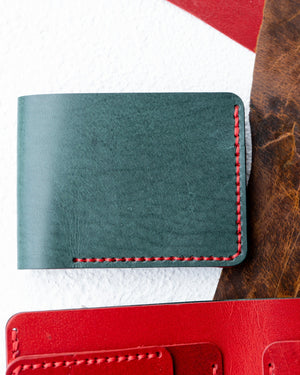
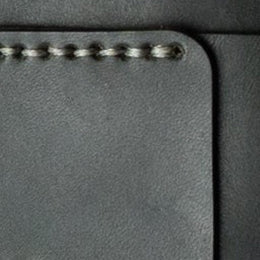
A saddle stitch uses two needles on one thread, worked by hand. Every hole is entered from both sides, so the two needles cross inside the leather and the thread locks against itself in each individual hole.
The consequence: cut a saddle stitch anywhere and the rest of the seam holds. The failure does not travel. One damaged stitch stays one damaged stitch, and it can be repaired in place decades later without opening the whole piece.
It is the stitch harness makers used on tack that had to survive a horse falling on it. That is where the name comes from.
Why it cannot be automated
No machine crosses two needles in one hole. It is not a matter of cost or willingness — the mechanism does not exist, because the action requires two hands moving in opposite directions at the same moment.
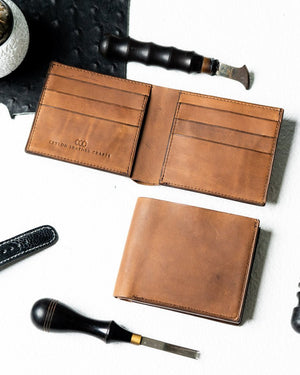
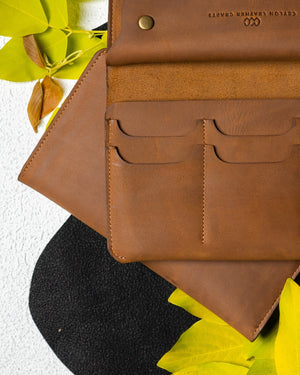
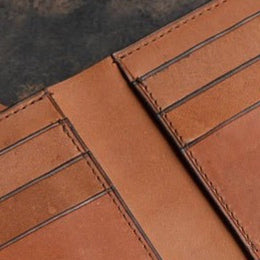
So every hole is marked, every hole is pricked, and every hole is sewn by a person. On a bifold wallet that is several hundred holes, and the seam around a card pocket alone can take longer than a machine would need for the entire wallet.
That time is the price difference
Not the leather, not a brand name, not a markup. Hours. A factory can produce dozens of wallets in the time it takes to hand-stitch one, and that ratio is what you are looking at when you compare two price tags.
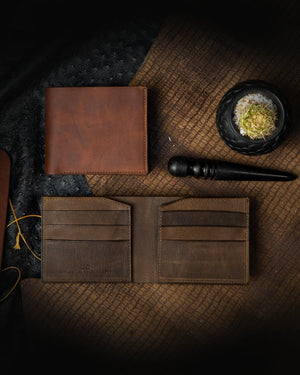
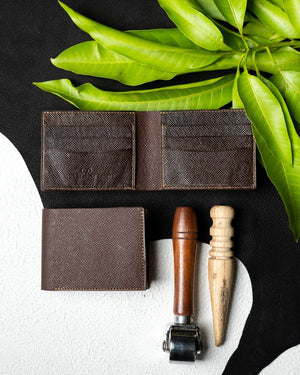
What you get back is a seam that will not run, edges bevelled and burnished by hand until a thumb slides along them, and a piece that can be repaired rather than replaced.
If you want to sew one yourself, we teach the stitch at the bench — see the workshop.